- 9557330403
- [email protected]
- SD 375, D Block, Shastri Nagar Ghaziabad, Uttar Pradesh, India
- 9557330403
- [email protected]
- SD 375, D Block, Shastri Nagar Ghaziabad, Uttar Pradesh, India
Abrasion in dentistry is a common yet often misunderstood form of non-carious tooth loss (NCTL). Simply put, it’s the abnormal wearing away of the tooth structure—specifically the enamel (the hard outer layer) and dentin (the layer beneath it)—caused by external mechanical forces.
Unlike dental caries (cavities), which are caused by bacteria, or erosion, which is caused by chemical processes (like acid), abrasion is purely mechanical. Think of it like sanding down a surface. Over time, repetitive actions with excessive force can literally scrub away your tooth structure, leading to significant cervical abrasion of teeth near the gumline.
This comprehensive guide will explore the intricate details of abrasion in dentistry, from its surprising causes to the cutting-edge abrasion treatment options available at Dental Park.
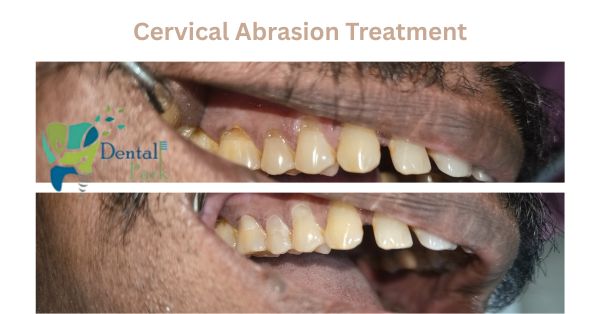
To fully grasp the concept, it’s essential to recognize that abrasion in dentistry often manifests as V-shaped or saucer-shaped notches, typically found at the junction where the tooth meets the gum. This is the cervical area, and it’s the thinnest part of the enamel, making it highly vulnerable to mechanical stress.
The term abrasion in dentistry is distinct from other forms of non-carious tooth wear:
Understanding the difference between abrasion and abfraction or abrasion erosion is crucial for your dentist at Dental Park to determine the correct treatment of abrasion. While they sometimes occur together (attrition abrasion erosion abfraction), the primary cause of abrasion is an external object.
While it may seem counter-intuitive, the very tools we use to maintain oral hygiene are often the main culprits behind abrasion in dentistry.
This is, by far, the most prevalent cause of cervical abrasion of teeth. Many people believe that scrubbing harder leads to cleaner teeth. The opposite is true.
Over years, this aggressive habit acts like a saw blade on the soft tooth structure near the gumline, resulting in classic V-shaped defects. Switching to a soft-bristled brush and using a gentle, circular motion is the immediate treatment of tooth abrasion that can halt the progression of the damage.
The abrasiveness of toothpaste is measured by its Relative Dentin Abrasivity (RDA) value. Toothpastes with very high RDA values, especially those marketed for “whitening” or “tartar control”, contain larger and harder particles intended to scrub stains. While effective for surface stains, their prolonged use with a heavy hand can dramatically accelerate abrasion in dentistry.
While essential for interdental cleaning, improper use of tools can cause localized abrasion:
In some cases, abrasion can be iatrogenic (caused by the dentist), though this is rare with modern techniques.
The signs of abrasion in dentistry are not just visual; they often manifest as discomfort. Recognizing these symptoms early is key to successful abrasion repair cost management and a successful permanent treatment of abrasion of teeth.
This is the most common reason patients seek professional help. The enamel is a fantastic insulator, protecting the underlying dentin. When abrasion wears through the enamel and exposes the dentin, the tiny microscopic tubules within the dentin—which lead directly to the tooth’s nerve—become exposed.
Fast relief tooth sensitivity abrasion is possible, but it starts with identifying and treating the underlying cause: the abrasion defect itself.
Physically, you will notice distinct defects near the gumline.
The worn-away area can also lead to aesthetic issues:
The philosophy for treating abrasion in dentistry is twofold: first, eliminate the cause; second, repair the damage. You cannot successfully repair the damage without stopping the harmful habit that caused it.
Before any restorative work, your dentist at Dental Park will educate you on proper hygiene:
For fast relief tooth sensitivity abrasion, non-invasive methods are often employed first.
Once the cause is controlled, the goal shifts to restoring the lost tooth structure. The choice of material and technique depends on the size and depth of the abrasion defect. This is where you consider the price for dental abrasion treatment and the longevity of the repair.
Once the cause is controlled, the goal shifts to restoring the lost tooth structure. The choice of material and technique depends on the size and depth of the abrasion defect. This is where you consider the price for dental abrasion treatment and the longevity of the repair.
For mild to moderate cervical abrasion cost is generally lowest with direct restorations.
| Restoration Type | Material | Indication | Dental Park Price |
|---|---|---|---|
| Glass Ionomer Cement (GIC) | Fluoride-releasing material | Small, shallow lesions; when moisture control is difficult. | Starting from Rs. 1000/- only |
| Composite Filling | Tooth-colored resin (Highly Aesthetic) | Small to moderate lesions; excellent aesthetics; the most common choice. | Starting from Rs. 1500/- only |
This is the most direct abrasion repair cost solution, offering both functional repair and aesthetic improvement.
For larger, deeper, or aesthetically demanding defects, or when abrasion has caused severe weakening of the tooth, a more comprehensive approach is needed.
| Restoration Type | Material | Indication | Dental Park Price |
|---|---|---|---|
| Composite Veneer | Direct application of composite resin over the entire facial surface. | Moderate to severe defects, especially for aesthetic correction of multiple teeth. | Starts from Rs. 2000 only |
| Ceramic Veneer | Custom-made, thin porcelain shell bonded to the front of the tooth. | Severe abrasion, high aesthetic demands, and long-term durability. | Starts from Rs. 5000 only |
| Dental Crown for Abrasion Coverage | Full coverage cap over the entire tooth. | Very deep defects where the tooth is structurally compromised or for full mouth rehabilitation. | Starting from Rs. 2500/- |
If the abrasive lesion is so deep that it has progressed to the pulp (the nerve chamber) and caused irreversible inflammation or infection, then root canal treatment may be necessary to save the tooth. Following the root canal, a dental crown will be needed to protect the structurally weakened tooth.
The final dental abrasion cost at Dental Park is determined by:
We strive to provide world-class care at transparent and affordable prices, ensuring you receive the highest quality abrasion treatment.
Since abrasion in dentistry is primarily a lifestyle disease, prevention is not just better; it’s the only way to ensure the damage doesn’t return after treatment.
Routine visits to Dental Park allow our experts to spot early signs of abrasion in dentistry before they become painful or require extensive abrasion repair cost procedures. We can identify the subtle grooves and provide immediate, customized advice on correcting your technique.
For a comprehensive understanding, let’s briefly clarify the critical distinctions in non-carious tooth loss.
| Feature | Abrasion | Abfraction |
|---|---|---|
| Primary Cause | External mechanical force (e.g., hard toothbrush) | Internal stress force (e.g., clenching/grinding) |
| Location | Typically on the exposed tooth surface | Always at the gumline/cervical area |
| Appearance | V-shaped or saucer-shaped grooves, smooth and shiny | Deep, often narrow, wedge-shaped lesions; may be sharp |
| Key Treatment | Eliminate the external habit & restore the defect | Correct the bite (splint/night guard) & restore the defect |
Abfraction is caused by the flexing of the tooth under heavy biting load. This flexing concentrates stress at the weakest point—the neck of the tooth—causing enamel to pop off. A patient may need a night guard in addition to a filling for successful abfraction treatment of abrasion.
When tooth structure is lost due to the combination of mechanical force and chemical dissolution (acid), it’s called abrasion erosion.
Your comprehensive diagnosis at Dental Park will differentiate these issues, ensuring the permanent treatment of abrasion of teeth addresses all contributing factors. Sono abrasion in dentistry and air abrasion in dentistry are advanced, less invasive techniques that our specialists use for precise and conservative treatment preparation.
At Dental Park, we understand that abrasion in dentistry is more than just a cosmetic issue—it’s a source of pain and potential long-term damage. Our approach is holistic, focusing on personalized care that addresses both the immediate symptoms and the underlying causes.
Our highly trained dentists use state-of-the-art diagnostic tools to precisely determine if your condition is classic abrasion, abfraction, erosion, or a combination. This accuracy is the foundation for an effective, permanent treatment of abrasion of teeth.
We offer a full spectrum of restorative solutions, from simple, cost-effective GIC fillings (Starting from Rs. 1000/-) to the highest quality, most aesthetic Ceramic Veneers (Rs. 5000 only). Our priority is to find the right balance between the best clinical outcome and your budget for dental abrasion cost.
We believe in empowering our patients. Our team takes the time to teach you the proper brushing techniques, helping you eliminate the habit that caused the problem and ensuring your treatment lasts.
Abrasion in dentistry is a prevalent problem, often leading to annoying tooth sensitivity abrasion and aesthetic concerns.24 The great news is that it is entirely preventable and highly treatable. By understanding the causes, especially the role of hard toothbrush abrasion, and seeking professional care, you can restore comfort and beauty to your smile.
Don’t let cervical abrasion of teeth compromise your oral health or prevent you from enjoying a cold drink. Whether you need fast relief tooth sensitivity abrasion or a permanent treatment of abrasion of teeth like a composite filling or veneer, the skilled team at Dental Park is ready to help.