
Living with a chronic condition like Systemic Lupus Erythematosus (SLE) means navigating a unique set of health challenges. While many are aware of its effects on the skin, joints, and kidneys, the impact on your oral health is just as significant and often serves as an early warning sign of the disease’s activity. The oral manifestations of lupus and their treatment are a critical aspect of managing your overall well-being, yet they are frequently misunderstood or overlooked.
At Dental Park – Dental & Maxillofacial Centre in Ghaziabad, we believe that empowered patients are the healthiest patients. Our expert team is dedicated to providing you with clear, authoritative, and trustworthy information to help you navigate your health journey with confidence.
In this comprehensive guide, you will learn about the intricate connection between lupus and your oral health. We will delve into the seven most common oral manifestations of lupus, explore why they occur, and outline the state-of-the-art diagnostic and treatment strategies we employ. This article is your resource for understanding and managing these symptoms, ensuring you can maintain your comfort, nutrition, and quality of life.
What is Systemic Lupus Erythematosus and How Does It Affect Your Mouth?
To understand the oral manifestations of lupus, it is essential first to grasp the nature of the disease itself. Systemic Lupus Erythematosus, or lupus, is a complex autoimmune disorder. In a healthy individual, the immune system acts as a vigilant security force, identifying and neutralizing foreign invaders like bacteria and viruses. In an autoimmune disease like lupus, this system becomes dysregulated and mistakenly identifies the body’s own healthy cells and tissues as hostile threats.
This misdirected immune attack triggers inflammation and can cause damage to a wide range of organ systems. The oral cavity, with its rich blood supply and rapid cell turnover, is a particularly common and sensitive site for this inflammation to emerge. In fact, research indicates that a high percentage of individuals with SLE will experience significant oral health issues at some stage of their illness. These problems are not isolated annoyances; they are direct expressions of the systemic disease process.
Recognizing these signs is vital. For some, an oral lesion is one of the very first indications of lupus, making your dentist at Dental Park an indispensable partner in achieving an early and accurate diagnosis.
7 Common Oral Manifestations of Lupus You Shouldn't Ignore
The signs of lupus in the mouth can be diverse and may mimic other common conditions. This is why a professional evaluation by a team experienced in maxillofacial pathology is so crucial. Here are the seven most common oral manifestations of lupus and their treatment that our specialists at Dental Park manage.
1. Mouth Ulcers: A Key Oral Manifestation of Lupus
Perhaps the most recognized oral sign of lupus, mouth ulcers are so characteristic that their presence is included in the American College of Rheumatology’s official classification criteria for the disease.
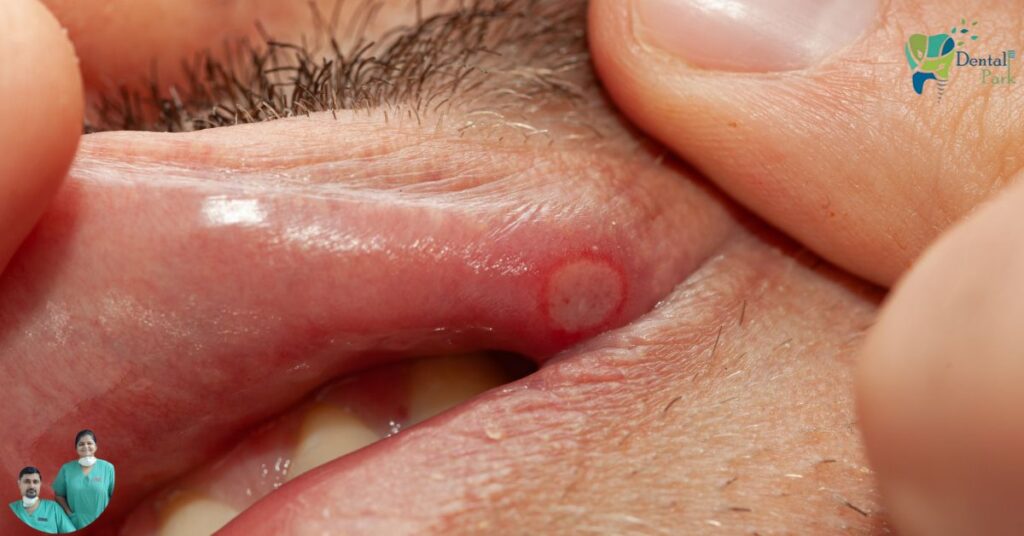
- Appearance and Location: These are distinct from typical canker sores. Lupus ulcers often appear as shallow sores or larger patches of redness (erythema) and erosion. A key feature can be a surrounding white, radiating border or nearby white papules. While they can occur anywhere, the palate (roof of the mouth) is a very common site, which helps distinguish them from other types of ulcers. The inner cheeks and lips are also frequently affected.
- The Pain Factor: One of the most important clinical points about these ulcers is their variable nature. They can be intensely painful, making eating and speaking difficult, or they can be completely asymptomatic. Painless ulcers can easily go unnoticed by a patient but provide a vital diagnostic clue for a trained dental professional during an examination.
- A Barometer for Your Health: The appearance and severity of these oral ulcers often mirror the overall activity of your lupus. A new crop of ulcers might indicate that your lupus is flaring systemically, making your regular dental check-ups an important part of monitoring your health status.
2. Chronic Discoid Lesions (DLE)
While ulcers tend to be acute, some patients develop more persistent lesions known as discoid lupus erythematosus (DLE) plaques. These are chronic inflammatory lesions that can be more stubborn.
- Appearance: Discoid lesions typically present as well-defined, slightly depressed red patches with a distinct white, scaly (hyperkeratotic) border. They can sometimes take on a “honeycomb” or lace-like pattern, which can cause them to be confused with another inflammatory condition called oral lichen planus. However, our specialists know that the palate is a more common location for DLE lesions in lupus compared to lichen planus, a helpful distinguishing feature.
3. Dry Mouth (Xerostomia): A Debilitating Symptom
The subjective feeling of a persistently dry mouth, known as xerostomia, is an extremely common and often distressing symptom for individuals with SLE. This is frequently accompanied by hyposalivation, an objectively measurable reduction in saliva flow. This is more than just thirst; it is a medical condition with serious downstream consequences for your oral health.
- The Causes: The reasons for dry mouth in lupus are often twofold. First, the disease process itself can directly target and damage the salivary glands, impairing their ability to produce saliva. This is especially true for patients who have a co-existing diagnosis of secondary Sjögren’s syndrome, another autoimmune condition that attacks moisture-producing glands. Second, many of the essential medications used to manage lupus—including corticosteroids like prednisone, NSAIDs, and other immunosuppressants—are known to cause hyposalivation as a side effect.
- The Consequences: Saliva is your mouth’s most important natural defense mechanism. Without an adequate supply, a cascade of problems can ensue, including a dramatically increased risk of tooth decay, difficulty chewing and swallowing, and a higher likelihood of developing opportunistic oral infections.
4. Oral Thrush (Candidiasis): An Opportunistic Infection
Directly linked to both dry mouth and the immunosuppressive effects of lupus medications, oral thrush is a fungal infection. It is caused by an overgrowth of Candida albicans, a yeast that is a normal inhabitant of the mouth in small, controlled numbers.
- Symptoms: In a dry, immunocompromised environment, this fungus can flourish. Thrush typically appears as creamy white patches or plaques on the tongue, inner cheeks, or roof of the mouth. These patches can often be wiped away, leaving behind a red, raw, and painful surface. It can also cause a burning sensation and an altered sense of taste.
5. Increased Risk of Gum Disease (Periodontitis)
The chronic, systemic inflammation that defines lupus does not stop at the soft tissues of the mouth; it extends to the gums and the underlying bone that supports your teeth. Patients with SLE have a significantly higher risk of developing and experiencing more severe forms of periodontal (gum) disease.
- The Connection: The inflammatory pathways that drive tissue damage in lupus are understood to be similar to those that fuel gum disease. This shared biology means the gums are more susceptible to irritation and infection from dental plaque. The first stage, gingivitis, presents as swollen, red, and bleeding gums. If left unmanaged, this can progress to periodontitis, a more severe condition where the inflammation begins to destroy the supporting bone, which can ultimately lead to tooth loss.
6. Lip Inflammation (Cheilitis)
The lips themselves can also be a target of lupus-related inflammation, a condition known as cheilitis. This typically manifests as persistent redness, scaling, cracking, or erosions on the vermilion border (the colored part of the lips). These lesions can be uncomfortable and cosmetically concerning for patients.
7. Medication-Related Oral Problems
A final, crucial point is that the oral manifestations of lupus and their treatment are intertwined. While medications are essential for controlling the systemic disease, they can sometimes introduce their own set of oral challenges. For example, the immunosuppressant methotrexate can cause oral ulcers as a direct side effect, complicating the clinical picture. Long-term use of corticosteroids, while vital for suppressing inflammation, can increase the risk of fungal infections and, in rare instances, contribute to medication-related osteonecrosis of the jaw (MRONJ). This highlights the absolute necessity of having a dental team that is knowledgeable about your condition and works in close collaboration with your rheumatologist.
Expert Diagnosis of Oral Manifestations of Lupus at Dental Park
Because the oral signs of lupus can mimic many other conditions, an accurate and timely diagnosis is paramount. This is where the specialized expertise of the Dental Park team is invaluable. We perform a comprehensive oral examination that goes far beyond just checking for cavities.
Our Diagnostic Process Includes:
- Comprehensive Examination and History: We begin with a detailed discussion of your medical history, your lupus diagnosis, and all medications you are taking. We then conduct a meticulous visual inspection of all the soft tissues of your mouth, looking for the subtle but characteristic signs of lupus-related lesions.
- Differential Diagnosis: Our maxillofacial specialists are experts at distinguishing lupus lesions from conditions with a similar appearance, such as oral lichen planus or recurrent aphthous stomatitis. We carefully consider the location, clinical appearance, and persistence of the lesions to arrive at the most likely diagnosis.
- Biopsy and Direct Immunofluorescence: For a definitive diagnosis, a biopsy is often required. This is a simple, minimally invasive procedure where a tiny sample of the affected tissue is taken for laboratory analysis. The tissue is examined in two ways:
- Histopathology: This involves looking at the tissue under a microscope to identify the specific pattern of inflammatory cells characteristic of lupus.
- Direct Immunofluorescence (DIF): This specialized test is used to detect the “lupus band”—a tell-tale, continuous deposit of antibodies (like IgG) and complement proteins along the tissue’s basement membrane. The presence of this band is a highly specific marker for lupus.
This thorough diagnostic process ensures we correctly identify the cause of your oral issues, which is the first step toward developing an effective, targeted treatment plan.
Comprehensive Treatment for Oral Manifestations of Lupus
Managing the oral health of a patient with lupus requires a multi-pronged, collaborative approach. The most effective strategy combines systemic disease control with targeted local therapies to provide relief and prevent long-term complications. At Dental Park, we work as part of your total healthcare team, coordinating closely with your rheumatologist.
The Foundation: Systemic Disease Control
The cornerstone of managing oral manifestations of lupus and their treatment is achieving good control over your systemic disease. The medications prescribed by your rheumatologist, such as antimalarials (hydroxychloroquine) and systemic corticosteroids (prednisone), work to calm the overactive immune system. As your overall disease activity diminishes, you will often see a corresponding improvement or complete resolution of your oral lesions, particularly acute ulcers.
Targeted Local Therapy for Oral Lesions
When oral sores are persistent, painful, or do not respond to systemic treatment alone, we turn to targeted topical therapies.
- Topical Corticosteroids: This is the gold standard for treating oral lupus lesions. These powerful anti-inflammatory medications are delivered as ointments, gels, or medicated mouthwashes. This approach applies the medicine directly to the sore, maximizing its healing effect while minimizing absorption into the rest of your body. For widespread inflammation, a dexamethasone rinse may be prescribed, while a high-potency ointment in an adhesive base can be used for discrete ulcers.
- Topical Calcineurin Inhibitors: In cases where long-term steroid use is needed, these medications serve as an excellent steroid-sparing alternative, providing anti-inflammatory benefits without the same side-effect profile.
Management Strategies for Dry Mouth (Xerostomia)
Managing dry mouth is a critical, ongoing process that dramatically improves comfort and prevents severe dental problems. We provide our patients with a comprehensive toolkit of strategies:
- Hydration: Sip water frequently throughout the day.
- Saliva Substitutes: We can recommend over-the-counter or prescription saliva substitutes, which come in sprays, gels, or rinses.
- Stimulating Saliva Flow: Chewing sugar-free gum (especially those containing xylitol) or sucking on sugar-free hard candies can help stimulate your own salivary glands.
- Meticulous Hygiene: With less saliva to protect your teeth, impeccable oral hygiene, including the use of prescription-strength fluoride toothpaste, is essential to prevent rampant decay.
Treating and Preventing Infections
If you develop oral thrush, we will prescribe an antifungal medication, such as a nystatin oral rinse, to bring the infection under control. To prevent secondary bacterial infections in ulcerated areas, we may also recommend the short-term use of an antiseptic mouthwash like chlorhexidine gluconate.
Frequently Asked Questions (FAQs)
Can oral manifestations of lupus be the first sign of the disease?
Yes, absolutely. For some individuals, a persistent mouth sore or lesion is one of the very first signs of SLE. This is why a thorough oral examination by a knowledgeable dentist can be crucial for early diagnosis and intervention.
Are mouth sores from lupus always painful?
No, and this is a very important point. While lupus ulcers can be very painful, they can also be completely painless. An asymptomatic ulcer can be a significant clinical sign of disease activity, even if it does not cause discomfort.
How can I manage a dry mouth caused by lupus medications?
Managing dry mouth involves a multi-faceted approach. Stay hydrated by sipping water, use over-the-counter saliva substitutes (sprays or gels), and chew sugar-free gum to stimulate saliva flow. It is also vital to maintain excellent oral hygiene and see your dentist regularly, as dry mouth significantly increases your risk for cavities.
Is it safe to have dental work done if I have lupus?
Yes, it is safe to have dental work done, but it requires careful planning and communication between your dentist and your rheumatologist. Your medication regimen (such as anticoagulants or long-term corticosteroids) may require special precautions. In some cases, preventive antibiotics may be prescribed before a procedure to prevent infection.
What is the main difference between a lupus ulcer and a regular canker sore?
While they can look similar, lupus ulcers have some distinguishing features. They are very commonly found on the hard palate (roof of the mouth), which is a less common site for typical canker sores. They may also present with surrounding redness and fine white lines. A definitive diagnosis often requires a biopsy.
Dental Park: Your Partner in Comprehensive Lupus Care
The mouth is a critical window into your overall health, and this is especially true for patients with Systemic Lupus Erythematosus. The oral manifestations of lupus and their treatment are integral to your overall management plan. These symptoms, from ulcers to dry mouth, are direct indicators of the underlying autoimmune process and can serve as valuable markers of disease activity.
Effective management requires a proactive, collaborative, and expert approach. The team at Dental Park – Dental & Maxillofacial Centre, Ghaziabad, is proud to be a vital partner in your healthcare journey. We combine state-of-the-art diagnostic techniques with personalized treatment plans to address your specific needs, always in close communication with your rheumatologist.
By understanding the link between lupus and your oral health, you become an empowered advocate for your own care. Never dismiss a new mouth sore or persistent dryness as a minor issue. These are important signs that deserve professional attention.